Site conditions that drive the spec
- Soil and saturation: Piedmont clay can pump under traffic when wet. Confirm that the surface can support concentrated wheel loads without rutting.
- Slope and benches: evaluate approach grades, cuts, and fill transitions. Leveling capability and wheelbase influence where the unit can stand safely, subject to the model’s instructions and site procedures.
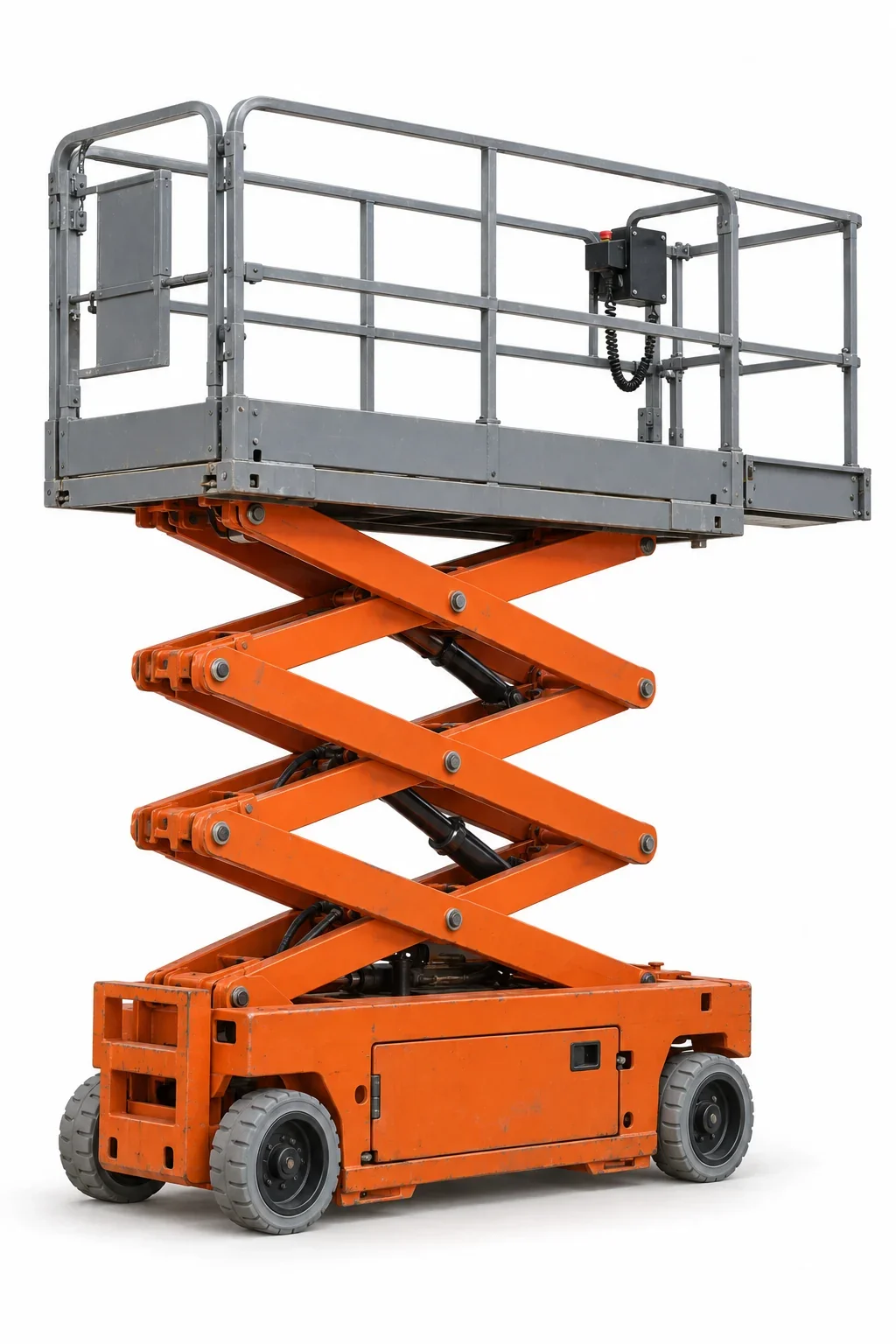
- Access width: fencing, utilities, and temporary stockpiles can limit turning and staging. Wider RT frames need more room than slab units.
Platform height and deck space
Outdoor façade, steel, and MEP work often needs taller platforms and larger decks for tools and materials. Choose height with buffer for hand work overhead and consider deck extensions for reach across forms or façade lines.
Fuel, noise, and emissions
Many exterior tasks tolerate diesel or gas power. For mixed indoor–outdoor days, hybrid or electric RT models may help reduce emissions near docks or open doorways. Coordinate fueling or charging based on shift length and site access.
When RT scissors are the wrong tool
- Obstacles between the machine and the target—canopies, piping, or retaining walls—may require up-and-over reach from /boom-lift-rental/.
- If the priority is moving and placing materials, look at /telehandler-rental/ for forks and reach instead of a personnel platform.
Winston-Salem project patterns
Innovation-focused campuses and logistics sites often combine paved yards with unpaved perimeters. Planning around rain events and selecting tire and platform configurations that tolerate minor irregularities can reduce downtime between weather windows.